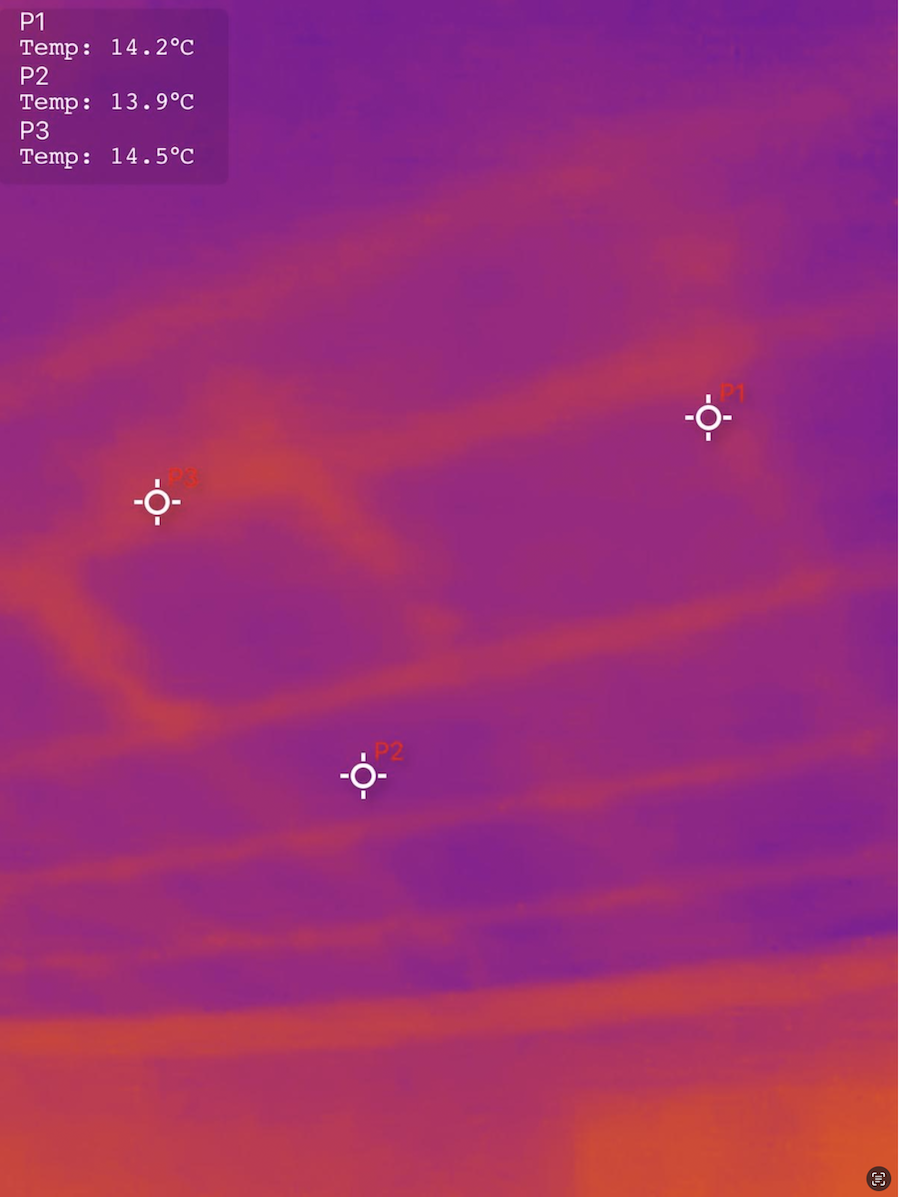
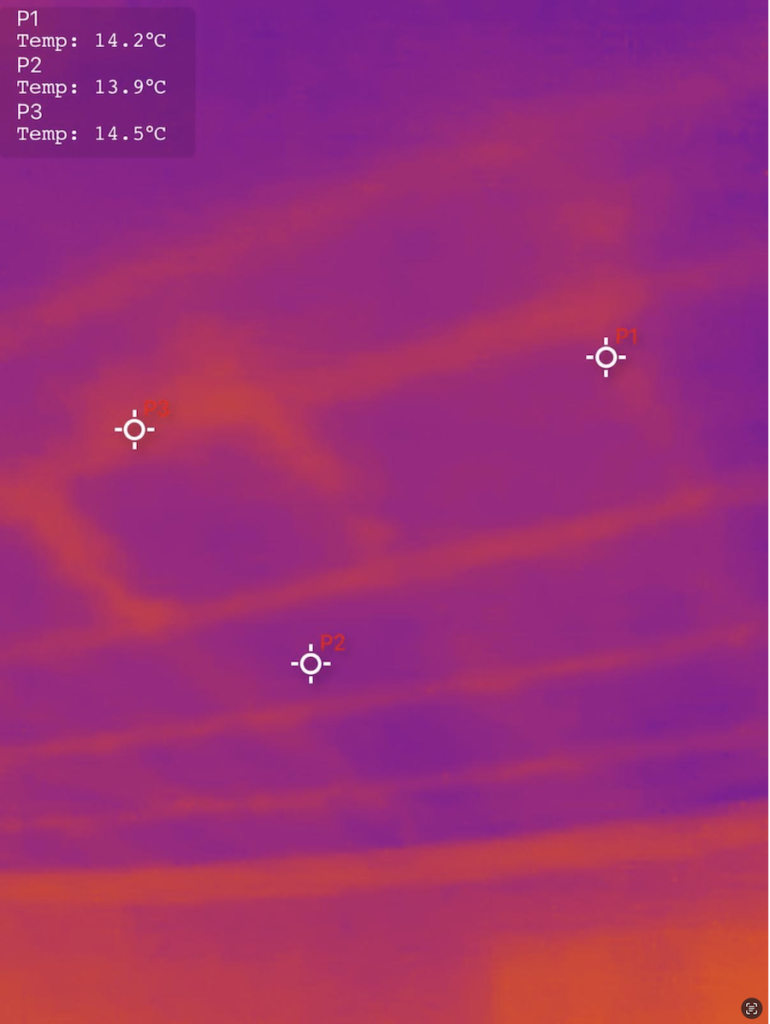
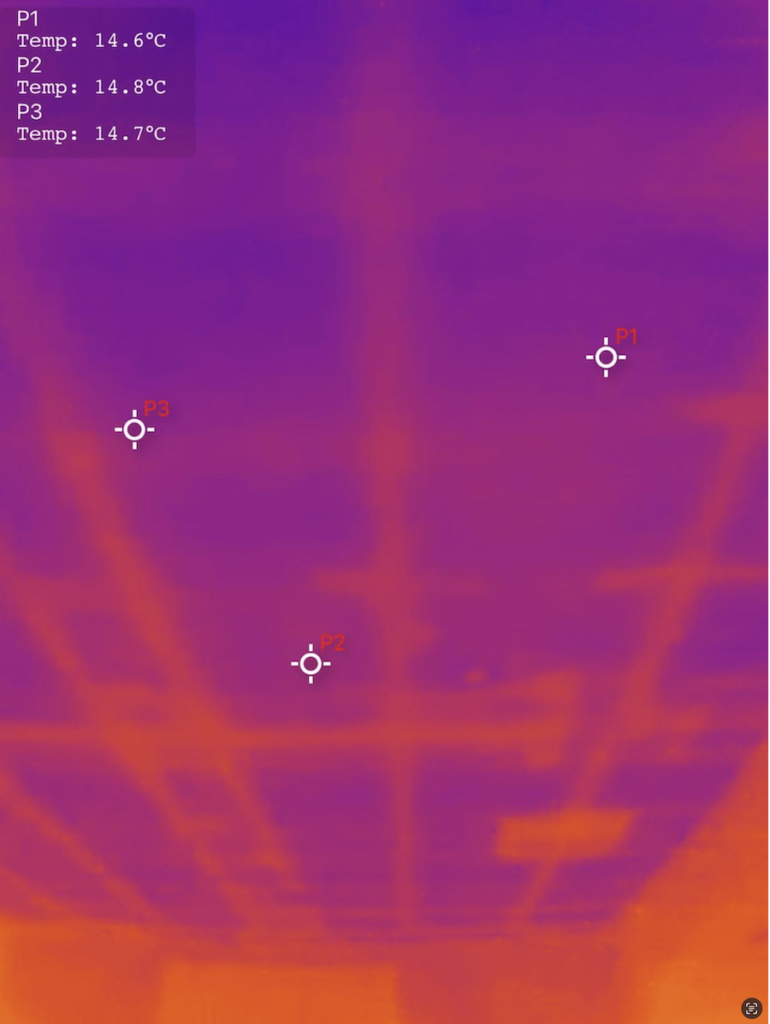
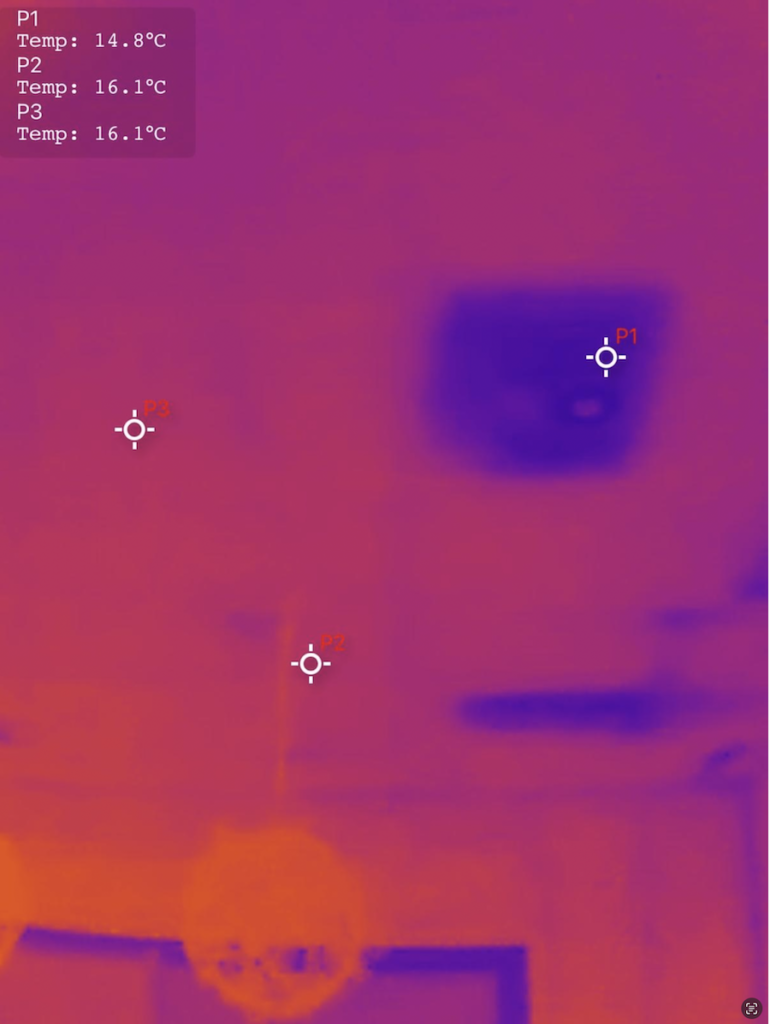
We had the ceiling insulation in much of our house removed a couple of days ago before we install our HVAC system. Today was a cold rainy day and whatever heat was still in the house has been leaking away as we have no heating. We took out our Thermal camera to see the state of the ceilings where there is no insulation, and also to look at the newer part of the house where we left the polyester insulation.
The bedroom
The bedroom has two external double brick walls, a large window, and at the moment no batts. The joists are now providing more resistance against heat flow than the rest of the ceiling. The joists are at around 14.5 degrees while the plasterboard is at 13.9. The outside temperature is around 13.5 degrees, and the inside temperature is pretty similar.
The living room
Our living room is also in the old part of the house where we have removed all the batts and now there is only plasterboard.
There is one spot on the ceiling where you can see the location of the evaporative cooling vent which we have capped with a plastic cover and which still has some of the insulated duct behind it.
The Lounge – still some insulation
This room still has polyester batts, but they don’t cover the entire ceiling and there are clear gaps around features like down lights.
Next steps
Tomorrow we will have the HVAC system installed. This will involve placing a new unit in the ceiling along with installing new ductwork and vents. The system should be operational mid next week, which will make the house more liveable, but we will still be losing a lot of heat through the ceiling.
We will also be having the down lights changed so that they are IC4 Compatible and can be safely placed underneath the new batts we will be installing.
Our current ceiling insulation is a patchwork of old solutions. Today we had much of the old insulation removed, a general cleanup, and the ductwork for the evaporative cooler removed. We will have new insulation installed soon after we install the HVAC system next week.
State of the current ceiling insulation
Our house has an original part about 70 years old, and an addition which was constructed around 30 years ago. The insulation in the addition is polyester batts around 180mm. The insulation in the original roof is a mixture of very thin degraded batts and some blown in insulation.
Image of the house addition ceiling before cleaning
Removing the old insulation
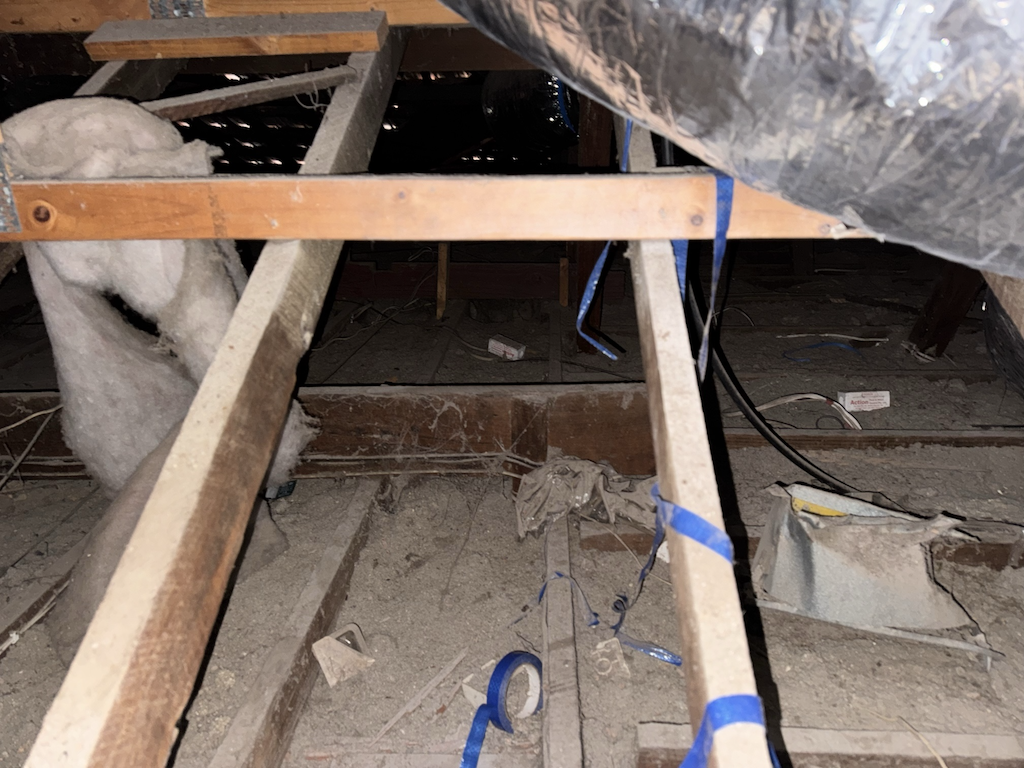
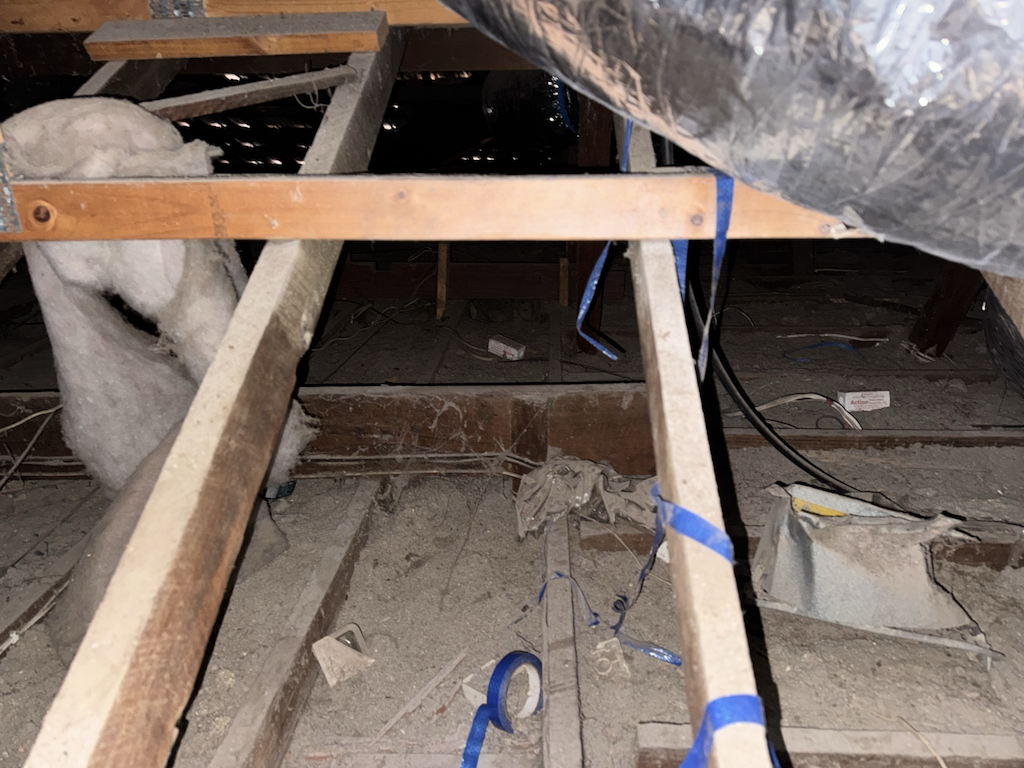
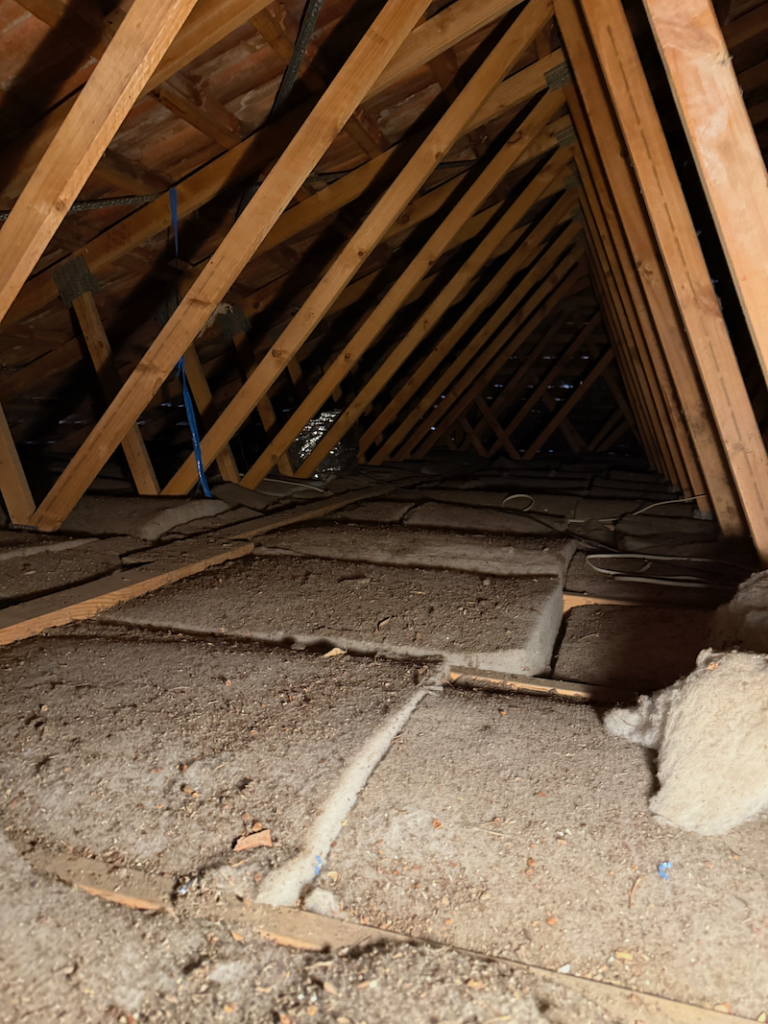
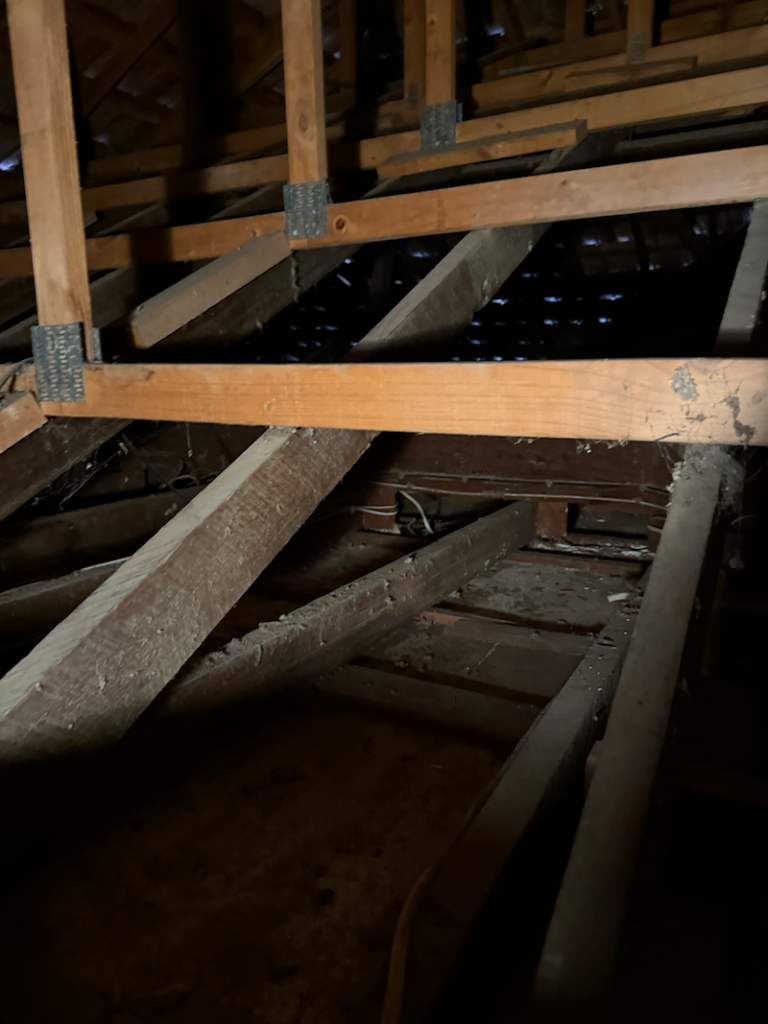
The team arrived this morning to remove the old insulation, clean the roof, and remove the old evaporative cooling ducts. They had a hose which they threaded into the roof space and essentially hoovered out the dusty old insulation. They also removed by hand the old very thin batts and the ducts.
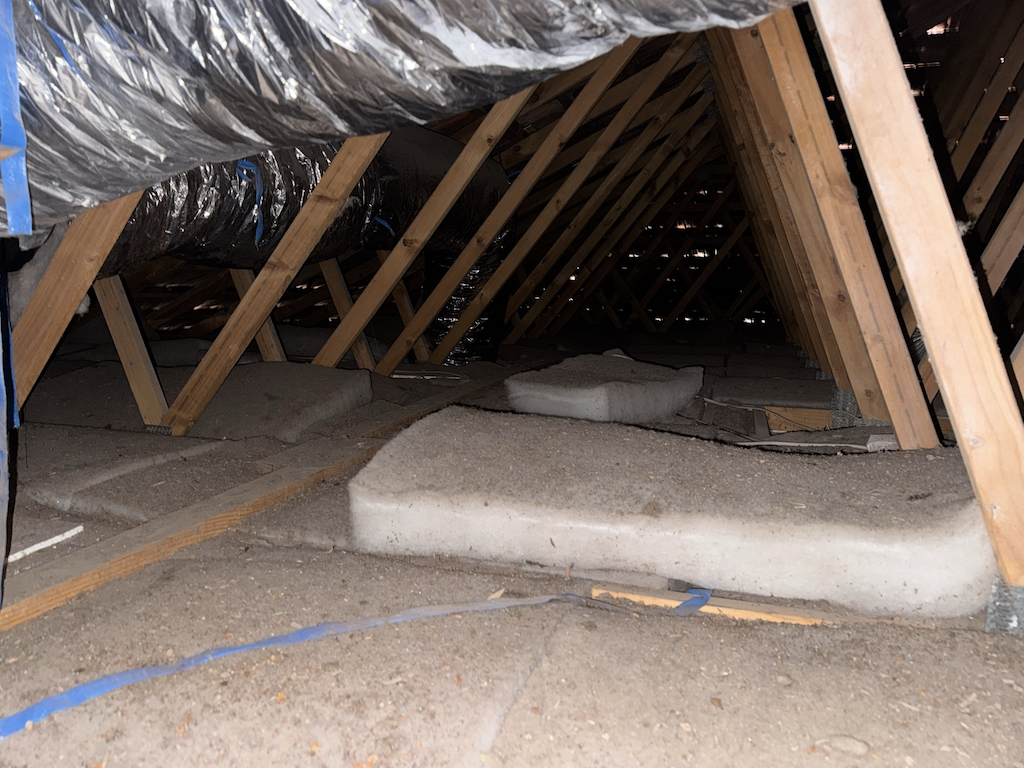
We decided to keep the polyester batts in the addition as they in good condition even though they are a bit dusty.
Roof space in addition after duct removalRoof space in original home after removing ducts and all insulation
Calculating the improvement in R value and performance
In order to calculate the improvement we expect, I first want to calculate what the current insulation performance is. I will do this only in the addition where the state of the insulation is better understood. This is also the part of the house we use the most (and is very cold in winter).
The addition has polyester 180mm batts. These have an R value of 3.01. In order to calculate the actual R value for the ceiling I have to take into account the joists which are wood beams. These have an R value of about 0.9, and they act as thermal bridges, carrying heat into the roof more easily than the areas which are covered with insulation. I then have to work out how much of the area of the ceiling is covered by insulation, and how much is joists2 . Joists are typically 140 mm deep, 45 mm wide and have a span of around 600 mm. A rough approximation is that between 8% and 12% of the roof space is covered by joists. I will assume as an approximation that this is 10% and then setting
Using the values above gives an R value for our ceiling of 2.43.
Adding more realistic assumptions about ceiling insulation
The ceiling insulation is missing in fairly large parts of the ceiling. For instance where there were vents and ducts, down lights, extractors. There are also just gaps.
To make a more realistic estimate of what the current performance might be I’m going to add another term for areas with no joist and no batt. These have only the plasterboard which has an R value of a little less than .1 and I assume that 10% of the ceiling is uncovered with batts.
The model is now that the fraction of batts is 80%, 10% is joists, and 10% is only plasterboard.
Then with for plasterboard R and the fraction of plasterboard the formula for calculating the overall R value is :
This gives a total R value of only 0.725 – ouch! Lots of little thermal bridges really kill the performance of ceiling insulation.
Modelling the improved performance of ceiling insulation
The key thing to calculate for the insulation performance is how well it does at preventing heat flow. To calculate the heat flow per unit of area Q from a warm space to a cold space through insulation which resists the movement of heat with an R value we need to calculate:
where is the tempearture difference between the hot and cold area
We can use this to calculate the heat flow through our ceiling. Assuming the temperature difference between the inside of the ceiling and the roof space is 10 degrees C (or K) the heat loss for a total area a is given by:
Using an area of 50 sqm for the ceiling area of our lounge/kitchen and the R value of 0.725 we calculated for the current state gives a heat flow of 689 W from our lounge into the roof. No wonder it is so cold.
We can look at how improvements in the R value will change this heat flow.
R Value
Heat Flow out of lounge
0.725
689 W
1
500 W
2
250 W
3
166 W
4
125 W
5
100 W
6
83 W
7
71 W
8
62 W
Heat flow from our lounge for various values of effective R value for insulation. Temp difference = 10 degrees.
There are obviously huge gains in getting from R below 1 to R = 4, and doubling the thickness of insulation from R=4 to R=8 only reduces the remaining heat loss by a factor of two at a very high cost. There is an exponential at work here.